Parkinson's Disease
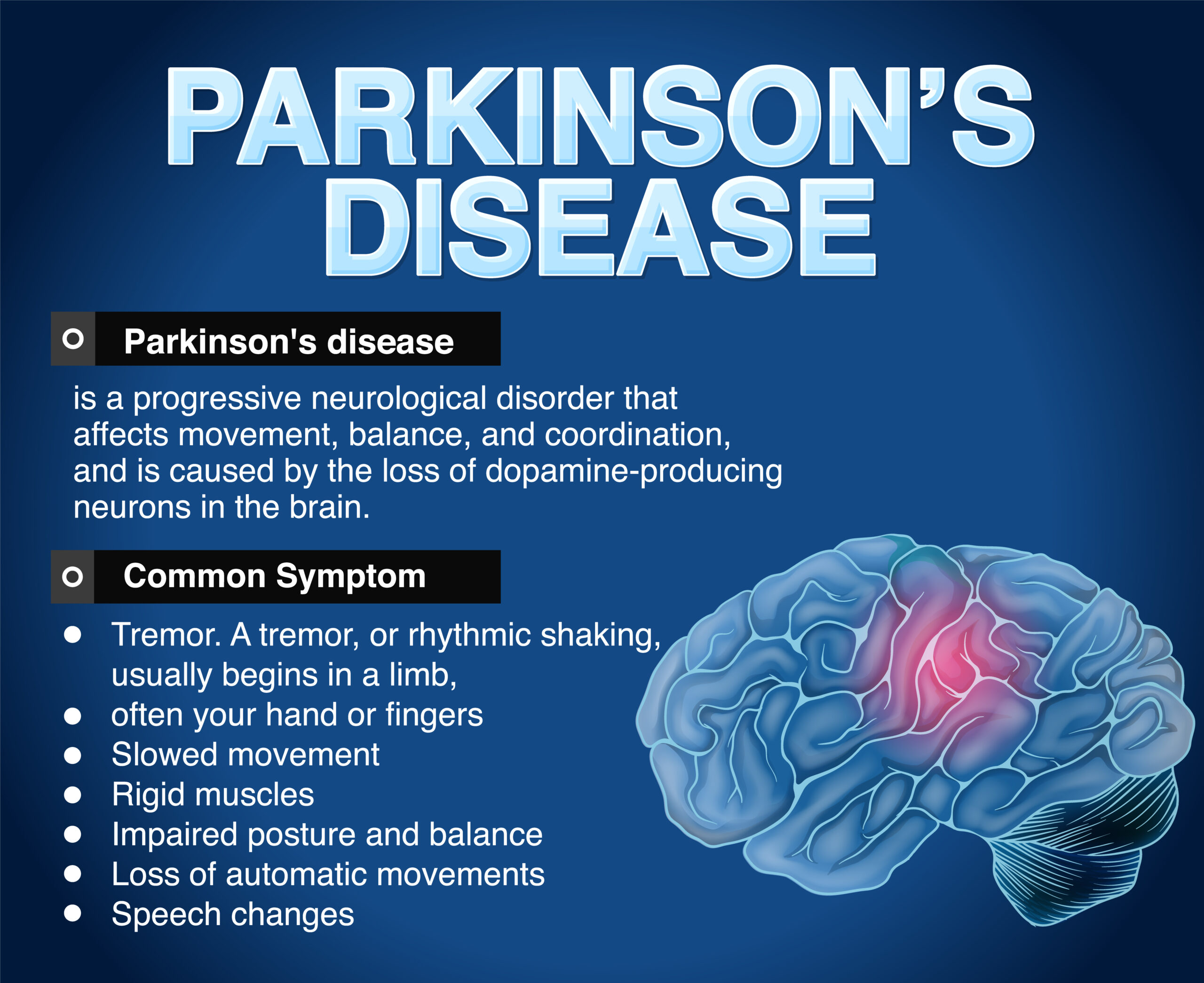
Parkinson's Disease: Understanding, Managing, and Living Well
What Is Parkinson’s Disease?
Parkinson’s disease is a progressive neurological disorder affecting movement and other functions. The good news? Effective treatments exist that significantly improve symptoms and quality of life. Many people with Parkinson’s live full, active lives for years with proper management.
According to the Parkinson’s Foundation, about 1 million Americans and more than 10 million people worldwide live with Parkinson’s disease. It’s the second most common neurodegenerative disease after Alzheimer’s and the fastest-growing neurological disorder globally.
Think of Parkinson’s as a problem with your brain’s “movement control system.” Specific brain cells that produce dopamine (a chemical that helps control movement) gradually die, causing movement difficulties that worsen over time.
The Four Cardinal Motor Symptoms
Parkinson’s disease is characterized by four main motor symptoms, though not everyone experiences all of them equally.
| Symptom | What It Is | Details |
|---|---|---|
| Tremor | Shaking or trembling (resting tremor most common) | 70-75% of people experience tremor |
| Rigidity | Stiffness and resistance to movement | Muscles feel tight and tense |
| Bradykinesia | Slowness in initiating and performing movements | Slowed, reduced movement amplitude |
| Postural Instability | Loss of balance and difficulty with posture | Appears later; increased fall risk |
Understanding Parkinson’s: What Happens in the Brain
Dopamine and Movement
According to recent research, Parkinson’s is fundamentally a dopamine problem:
The Dopamine Story:
Dopamine is a neurotransmitter (brain chemical) that controls smooth, coordinated movement
In Parkinson’s, dopamine-producing neurons in the substantia nigra gradually die
When 70-80% of dopamine is lost, Parkinson’s symptoms become noticeable
This happens gradually over years, which is why symptoms start mild and progress
Why Neurons Die: Current Understanding
Research suggests multiple mechanisms:
Protein accumulation: Alpha-synuclein protein clumps damage cells
Mitochondrial dysfunction: Energy production fails in brain cells
Oxidative stress: Free radicals damage dopamine neurons
Genetic factors: Some people inherit mutations increasing Parkinson’s risk
Environmental factors: Unknown triggers combined with genetic susceptibility
Symptoms Beyond Movement
Parkinson’s affects more than just movement. According to Physio-pedia, non-motor symptoms often appear:
Non-Motor Symptoms
✓ Early (Sometimes Before Movement Symptoms):
Loss of smell (anosmia)
Sleep disturbances
Mood changes (depression, anxiety)
Constipation
Excessive salivation
✓ As Disease Progresses:
Cognitive changes (thinking, memory)
Speech difficulties (quieter voice, slurred words)
Swallowing problems
Sexual dysfunction
Urinary problems
Hallucinations or psychosis (later stages)
Important: Early recognition of non-motor symptoms helps doctors diagnose Parkinson’s earlier, before movement problems become obvious.
Stages of Parkinson’s Disease
According to the Hoehn and Yahr staging system, Parkinson’s progresses through stages:
| Stage | Duration | Characteristics | Severity |
|---|---|---|---|
| 1 | Varies widely | Mild symptoms on one side only, minimal interference | Early |
| 2 | ~5 years | Bilateral symptoms (both sides), noticeable stiffness | Early |
| 3 | ~2 years | Balance loss (turning point), falls more common | Middle |
| 4 | Varies | Significant disability, needs assistance with tasks | Advanced |
| 5 | Varies | Severe disability, often needs full-time care | Advanced |
Important Timeline Facts:
Most people advance one stage every 2 years (except stage 2: ~5 years)
One-third remain in stages 1-2 for up to 10 years
Many people never reach advanced stages
Everyone progresses differently—timeline is unpredictable
Getting Diagnosed
Parkinson’s diagnosis is clinical—based on symptoms and examination, not a single test.
Diagnostic Approach
Doctor Will:
Take detailed symptom history
Perform neurological examination (testing strength, reflexes, movement)
Observe for cardinal symptoms
Check response to levodopa medication (if symptoms improve with medication, supports diagnosis)
Diagnostic Tests (When Needed)
| Test | What It Shows |
|---|---|
| MRI or CT | Rules out other brain conditions mimicking Parkinson’s |
| DaTscan (SPECT) | Shows dopamine-producing neuron loss pattern |
| 7 Tesla MRI | Advanced imaging detecting dopaminergic cell loss |
| Blood Tests | Rules out other conditions, checks for genetic mutations |
Common Misdiagnosis
About 25% of Parkinson’s cases are initially misdiagnosed. Conditions that mimic Parkinson’s include:
Essential tremor
Multiple system atrophy
Progressive supranuclear palsy
Vascular parkinsonism
Treatment: Multiple Approaches
Medication Treatment
Levodopa (L-DOPA): Gold Standard
Levodopa is still the most effective medication nearly 40 years after introduction:
How it works:
Brain converts levodopa into dopamine
Improves motor symptoms significantly
Important considerations:
Given with carbidopa (prevents breakdown before reaching brain)
Effectiveness may decrease over time (5-10 years)
Higher doses needed as disease progresses
Dyskinesias (involuntary movements) may develop with long-term use
Other Medications:
Dopamine agonists (mimic dopamine action)
MAO-B inhibitors (slow dopamine breakdown)
COMT inhibitors (extend levodopa action)
Anticholinergics (reduce tremor)
Amantadine (reduces dyskinesias)
Deep Brain Stimulation (DBS)
DBS is a surgical treatment for advanced Parkinson’s:
What It Is:
Thin electrodes implanted in brain regions controlling movement
Electrodes deliver electrical pulses (similar to pacemaker for brain)
Connected to pulse generator implanted in chest
Reduces “off” time and dyskinesias while allowing lower levodopa doses
Best For:
People with good initial levodopa response
Disease duration 4+ years
Medication complications (dyskinesias, off-time)
Motor symptoms not controlled by medication alone
Not a Cure: DBS helps manage symptoms but doesn’t slow disease progression.
Physical Therapy and Rehabilitation
Research shows physical therapy significantly improves quality of life:
| Benefit Area | Improvements Documented |
|---|---|
| Mobility & Strength | Improved gait speed, endurance, muscle strength |
| Balance | Better balance, reduced fall risk |
| Functional Ability | Better ability to perform daily activities |
| Confidence | Enhanced independence and psychological well-being |
Physical Therapist Helps With:
Gait training (walking improvements)
Balance exercises
Strength training (safe resistance exercise)
Movement strategies for freezing of gait
Fall prevention
Energy conservation techniques
Other Therapies:
Speech therapy: Improves voice volume and clarity
Occupational therapy: Strategies for daily activity management
Psychology/counseling: Addresses mood and emotional challenges
Living With Parkinson’s: Daily Management
Strategies for Common Challenges
Freezing of Gait (Sudden Inability to Move):
Rhythmic walking with music/counting
Visual targets (stepping over lines)
Cueing techniques
Rigidity and Stiffness:
Regular stretching (morning and evening)
Warm bath before exercise
Gradual, slow movements before rapid ones
Tremor:
Weighted utensils for eating
Adapted clothing (buttons to zippers)
Adaptive devices for writing
Speech Difficulties:
Speech therapy exercises
Speaking slowly and clearly
Amplification devices if needed
Lifestyle Support
✓ Maintain social connections – Reduces depression, maintains cognitive function
✓ Regular exercise – Walking, dancing, tai chi beneficial
✓ Mental stimulation – Puzzles, reading, learning
✓ Sleep management – Important for dopamine function
✓ Diet – Balanced nutrition; consult doctor about levodopa and protein timing
✓ Support groups – Connect with others, share strategies
✓ Caregiver support – Care partners need breaks and support too
Frequently Asked Questions
Parkinson’s itself is not directly fatal, but complications (falls, swallowing problems, infections) can be serious. With proper management and care, life expectancy is near normal, though quality of life varies based on symptom control.
Most cases aren’t inherited (about 90% are sporadic). However, 5-10% have genetic forms. Having a parent with Parkinson’s increases risk but doesn’t guarantee development.
Currently no cure exists. However, medications, DBS, physical therapy, and lifestyle management effectively control symptoms. Research into disease-modifying treatments continues.
Disease progression varies widely. Many people remain independent for years. Regular treatment, physical therapy, and lifestyle management help maintain function. Planning ahead (financial, care) helps address future needs.
Exercise doesn’t slow disease progression but significantly improves and maintains function. Physical activity is crucial for best outcomes.
Tremor is an involuntary shaking from Parkinson’s itself. Dyskinesia is involuntary movement caused by long-term levodopa medication. Dyskinesia is different—typically more flowing, less rhythmic.
If experiencing Parkinson’s symptoms (tremor, slowness, stiffness, balance loss), see your doctor. Early evaluation allows earlier treatment and better long-term outcomes.
Yes, absolutely. Many people live fulfilling lives—working, traveling, maintaining relationships—with proper management. Early diagnosis and treatment improve this outlook significantly.
Your Next Steps with NeuroLogic Neurocare
Dr. Mohammed Imran Khan specializes in diagnosing and treating Parkinson’s disease. Early diagnosis and expert management significantly improve symptom control and quality of life.
Quick Links:
Early detection and treatment matter. With proper care, most people with Parkinson’s manage symptoms well and maintain quality of life. Contact NeuroLogic Neurocare today to get a comprehensive neurological evaluation and personalized treatment plan. Your journey toward better symptom management starts now.
Disclaimer:
This article is for educational purposes only and is not a substitute for professional medical advice, diagnosis, or treatment. If you’re experiencing symptoms of Parkinson’s disease, consult a qualified neurologist for proper evaluation and personalized care. Always discuss symptoms, treatment options, and medications with your healthcare provider.